
Everyday care
Practical Daily Cat Care: At-home Observation, Brushing, Nail Trimming, Ear & Oral Care
Build a low-stress routine for observing your cat, brushing the coat, trimming nails and checking ear and oral health at home.
By PettyCatty Editorial Team · Updated 30 September 2026
PettyCatty perspective
A short observation routine plus calm, scheduled maintenance makes it easier to learn your cat’s baseline and notice subtle changes before they become emergencies.
What to check
Grooming cannot diagnose or treat illness. Stop if your cat is distressed, avoid deep ear cleaning and seek veterinary advice for pain, persistent symptoms, abnormal urination or changes in appetite and weight.
Further reading
Overview
Cats are masters at hiding discomfort. By the time owners notice obvious signs, many conditions are no longer minor issues. Daily cat care works best as two tracks: daily observation and hands-on routine maintenance.
This guide covers brushing frequency by coat type, safe nail trimming for indoor cats, the less-is-more principle for oral and ear care, and the weight and litter-box cues that can reveal abnormalities early. Tailor every procedure to your cat’s temperament and introduce it gradually.
The guidance below applies to healthy adult indoor cats. Skin disorders, ear mites, severe periodontal inflammation, surgical wounds and similar conditions require an individualized plan from your veterinarian.
Two Parallel Routines: Daily Checks and Periodic Maintenance
Splitting tasks is easier to sustain than one long grooming session at the weekend, and it helps your cat build predictable feelings of security.
Observation track (recommended: 3–5 minutes daily): monitor food and water intake; watch for sudden changes in energy, interaction or hiding behaviour; check the colour and volume of eye and nasal discharge; assess coat condition and self-grooming; and track litter-box visits, stool consistency and urine clump size.
Hands-on track (scheduled weekly or monthly): brush according to coat type, check nails every 2–4 weeks, practise oral inspection and toothbrushing, make visual ear checks, record weight and review environmental enrichment.
Healthy cats do not need frequent baths. Over-washing damages the skin’s lipid barrier and causes stress. Bathe only when your vet recommends a therapeutic bath or when your cat is contaminated with a substance it cannot lick off.
Sample Weekly Care Schedule
Use this as a reference timetable for indoor cats, not a rigid checklist. In multi-cat households, record each cat separately so you do not assume that someone must have eaten.
- Monday: weigh your cat or feel its ribs for body condition; check whether nails catch carpets or make clicking sounds when walking.
- Tuesday: brush the coat and run your hands along it to feel for lumps, dandruff or flea dirt around the nape, armpits and belly.
- Wednesday: make a quick oral check by smelling the breath, looking at the gums and watching for chewing on one side.
- Thursday: review the litter box, including the number and size of urine clumps and stool firmness. Note changes in water intake or wet food consumption.
- Friday: make a visual ear check without inserting cleaning tools. Note odour, head shaking or ear scratching.
- Saturday: trim nails if needed or practise nail-trim desensitisation. Offer a small, immediate reward rather than extra snacks after meals.
- Sunday: check the environment, including scratching posts, elevated resting spots, separated food and water bowls, and safe hiding places.
Brushing: Choose Tools Based on Coat Type
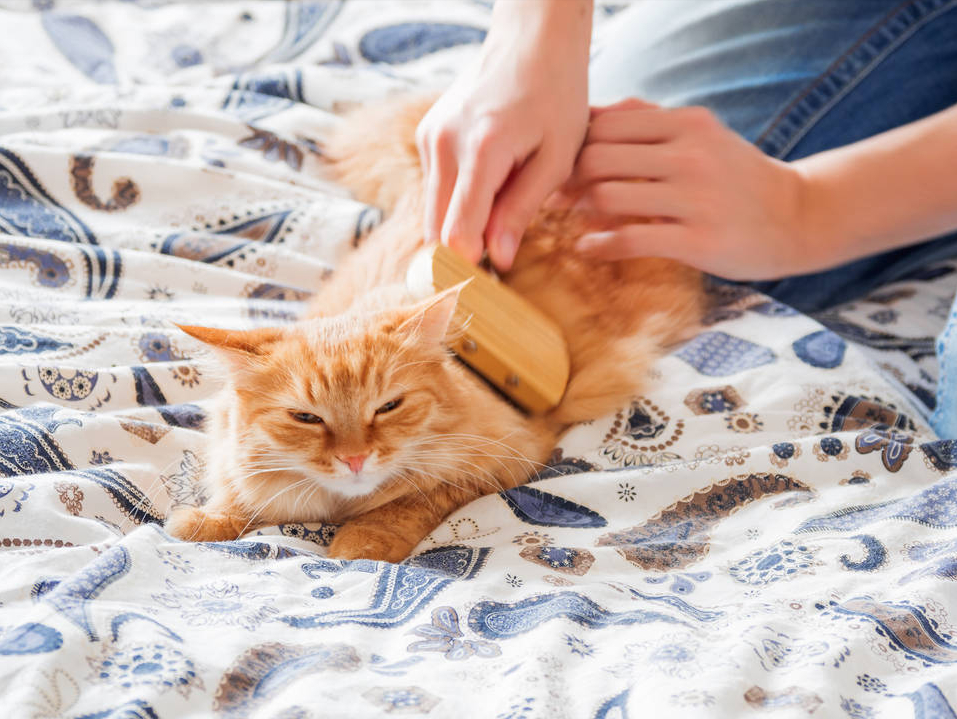
Short-haired domestic cats usually do well with a rubber brush, fine-tooth comb or grooming glove. Brush 2–3 times weekly, increasing to every other day during shedding seasons, and focus on loose fur on the back and belly while checking the skin for red spots or scabs.
Semi-longhair and long-haired thick-coat breeds usually need a wide-tooth comb and slicker comb. Daily brushing is required for most, with two short sessions during heavy shedding. Check the armpits, inner hind legs, tail base and chest because these areas mat easily. Work from the outer edges of a clump, hold the skin above the mat and never pull hard on knots.
Brush when your cat is relaxed, after waking or after a meal. If you notice heavy dandruff, symmetrical hair loss or frequent scratching, ask a vet about fleas, allergies or endocrine issues instead of bathing more often.
Nail Trimming: Small, Frequent Trims Are Safer
Indoor cats wear down their claws less. Overgrown nails catch fabric, split or alter gait. The goal is to round the tip, not cut the nail extremely short.
If bleeding occurs, press styptic powder firmly for 10–20 seconds. Do not force further trimming on that paw the same day. If your cat resists violently, yowls or attacks, pause and resume desensitisation training instead of using more restraint.
- Prepare cat nail clippers, styptic powder or cornstarch for emergency bleeding, and good lighting. If needed, wrap your cat loosely in a towel with one paw exposed.
- Press the paw pad gently to extend the claw. For clear nails, identify the pink quick and cut 1–2 mm ahead of it.
- For dark nails where the quick cannot be seen, trim only a tiny sliver from the tip each time. Multiple small cuts are safer than one deep cut.
- Immediately reward your cat after trimming and end the session. Even one nail can count as a successful positive session.
Oral and Ear Care: Examine Without Overdoing It
Periodontal disease is extremely common in adult cats and often overlooked. For ears, the opposite applies: over-cleaning irritates skin and can trigger inflammation.
- Oral care: use cat-specific toothpaste. Human toothpaste and xylitol-containing dog products are unsafe. Build up gradually from letting the cat lick toothpaste, to touching the lips, to short brushing of the outer canine teeth.
- Sudden bad breath, drooling, chewing on one side or swollen and bleeding gums require a veterinary oral examination. Home brushing cannot replace professional dental cleaning and treatment.
- Ear care: healthy ears are pale pink, with little odour and no frequent head shaking or scratching. Do not clean healthy ears, and never insert cotton swabs deep into the ear canal.
- Dark coffee-ground discharge, foul smell or head tilting can indicate ear mites or infection. Arrange a veterinary examination before medication and do not use human ear drops long-term.
Tear Stains, Weight and Litter Boxes: Three At-home Health Checks
Persistent one-sided tearing, conjunctival redness or a protruding third eyelid can relate to tear-duct obstruction, conjunctivitis or upper respiratory problems. Consult a vet before trying tear-stain removers.
For weight management, weigh your cat every 2–4 weeks at the same time and on the same scale. You should be able to feel the ribs without them protruding noticeably. A steady weight gain or loss of 5%–10% within two weeks warrants a feeding review and professional advice.
The litter box is one of the most reliable health indicators. Smaller or fewer urine clumps, straining with no output, or stool that remains very dry or loose for more than 24–48 hours are warning signs. For male cats with abnormal urinating posture, lower urinary tract obstruction is an emergency.
7-Day Desensitisation Plan
For cats afraid of nail trims or toothbrushing, use very short sessions of no more than 3–5 minutes per day. The goal is a positive association, not completing every task at once.
- Days 1–2: show the grooming tools and offer treats. Bring the tools near the cat without touching it.
- Days 3–4: briefly touch the paw or lip area for one second, reward and stop.
- Days 5–6: try trimming one nail on a single paw or brush the outer teeth for three seconds.
- Day 7: assess tolerance. If resistance increases, return to the prior stage and do not insist on finishing everything.
At-home Health Screening: Red, Yellow and Green Alerts
Use the following signals to decide how quickly to seek help. When in doubt, contact your veterinary team.
- Red: lethargy, refusal to eat for over 24 hours, rapid breathing or open-mouth panting — contact your vet or an emergency clinic immediately. Do not force-feed or medicate at home.
- Red: a male cat repeatedly straining in the litter box, yowling or licking the genitals, or a sudden drop in urine clumps — treat this as an emergency.
- Yellow: watery or soft stool lasting over 48 hours, or vomiting three or more times a day — record symptoms and diet changes and book a vet appointment. Kittens and senior cats need earlier assessment.
- Yellow: ear scratching or head shaking, smelly ear discharge, swollen gums or bad breath — stop deep home cleaning and seek diagnosis and prescribed medication.
- Green: increased shedding during coat change, mild tear stains or slightly long nails — step up brushing and nail-trim practice and monitor for improvement within a week.
- Green: stable weight, normal food and water intake, and firm litter output — keep the current routine and review equipment and hiding spots monthly.
Learn Your Cat’s Normal Baseline
The true value of daily care is learning your cat’s normal baseline. When something changes, even a subtle sign such as not rubbing against you as much, records of weight trends and litter observations can help your veterinarian diagnose the issue faster.